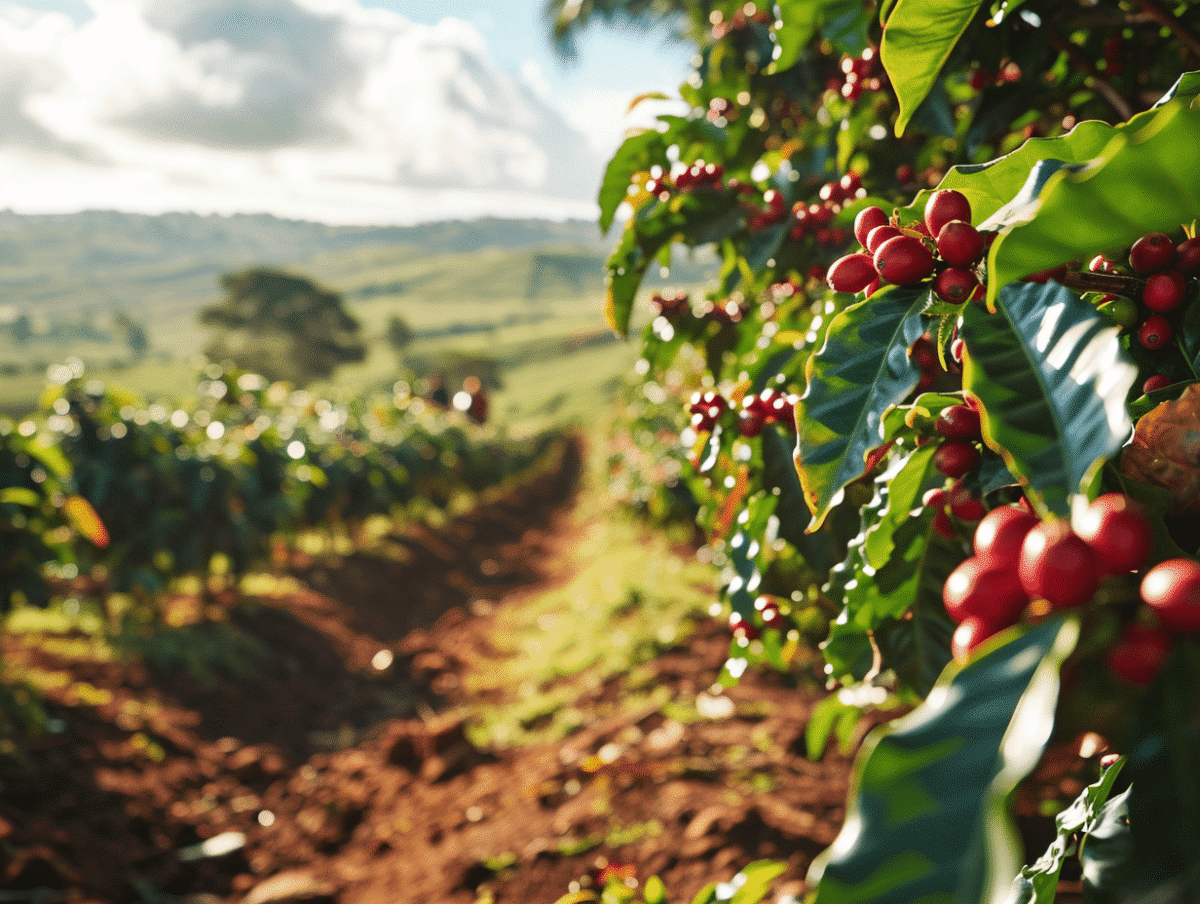
In the heart of the misty mountains and on the sun-drenched hills, coffee fields stretch as far as the eye can see, forming a patchwork of shades ranging from the softest green to the cherry red of ripe beans. Coffee cultivation is an ancestral tradition and an art passed down from generation to generation, involving a deep understanding of the terroir and the cycles of nature. From the choice of the variety to cultivate to the delicate harvesting of the cherries, each step is crucial in shaping the aromatic profile of the coffee that we ultimately savor in our cups.
Coffee Varieties and Their Characteristics
Arabica Coffee and Robusta Coffee, two names that resonate strongly in the world of coffees from around the globe. These two varieties, derived from the species Coffea Arabica and Coffea Canephora, differ both in their taste profile and their growing conditions. Arabica, delicate and aromatic, accounts for about 75% of the world production, preferring higher altitudes and cooler climates. Robusta, bolder and more powerful, contains twice as much caffeine and thrives better in hot and humid climates.
The quality of coffee is intrinsically linked to these varieties. Arabica is adorned with subtle notes, often fruity or floral, that delight the most discerning palates. In contrast, Robusta, more robust and less acidic, yields an intensely rich cup with a pronounced bitterness, appreciated in blends and espressos. The Revue de Liberée emphasizes that this diversity is essential to cater to the varied tastes of discerning consumers.
The variations within these categories are numerous. Take, for example, Yirgacheffe coffee, an Ethiopian Arabica, often regarded as the best in its region. Its complex aromas and light body make it a sought-after grand cru among connoisseurs. Each variety, each terroir, endows the coffee plant with the ability to produce beans with unique characteristics, offering a flavor palette that is as rich as it is varied.

From Harvest to Cup: The Coffee Transformation Process
The coffee harvest is a decisive step that determines the quality of the beverage we cherish. The methods vary: picking, where only ripe cherries are hand-picked, stripping, where all cherries are harvested at once, or the mechanical method, which, as the name suggests, employs machines. The coffee cherries are then subjected to processing methods that can be dry or wet, each influencing the final aromatic profile of the coffee.
Once the coffee beans are extracted from the cherries and dried, we obtain green coffee, still far from the cup but ready for roasting. This crucial step transforms the odorless beans into black pearls exuding captivating aromas. Roasting must be carefully mastered, as it reveals and alters the taste of the coffee: a lightly roasted bean will have tangy notes, while a dark roast will provide a stronger taste and sometimes even caramelized flavors.
The coffee tasting, or cupping, follows this metamorphosis. Experts evaluate the coffee according to specific criteria: aroma, flavor, body, acidity, and aftertaste. It is on this occasion that the profiles of the coffees are defined, allowing connoisseurs to select the blends that will satisfy the palates of the most demanding enthusiasts.
Finally, let us mention the coffee producers, these countries whose terroirs and know-how shape the nuances of each bean. Brazil, at the top of the list, is the largest producer, followed by countries like Vietnam. The growing conditions, such as altitude and tropical climate, are key factors. And let’s innovate with agroforestry, which combines trees and crops, for coffee that respects the environment and enriches biodiversity.