
Internet refers to a global network of interconnected computer networks using standardized protocols. In the 21st century, this infrastructure goes beyond just browsing web pages: it underpins communication, work, transactions, and an increasing share of everyday objects. Here are ten concrete advantages of the Internet ranked by their impact on daily life.
1. Instant access to information with critical filtering

A search engine returns results in a fraction of a second. The real advantage lies not in raw speed, but in the ability to sort and evaluate sources found online.
Educational digital programs in France now place critical thinking, communication, and literacy as core 21st-century skills. Access to information is only valuable if the user can distinguish reliable data from rumors shared on social media.
To delve deeper into this topic, a file lists the advantages of the Internet on Geektroniques with a focus on concrete uses and digital education.
2. Remote work and organizational transformation

The Ministry of Labor notes that the Internet, digitalization, and generative AI tools are profoundly transforming professional activities. Workflows are becoming faster, distributed, and automated, allowing teams spread across multiple sites to collaborate without delay.
Remote work goes beyond mere comfort: it reduces daily commutes, opens recruitment to distant job pools, and alters the very organization of companies. Video conferencing services, online project management, and instant messaging form the technical foundation of this transformation.
3. Real-time communication via messaging and video conferencing

Email, instant messaging, video calls: the Internet has compressed communication time to just a few seconds, regardless of geographical distance. This immediacy changes the relationship between loved ones separated by an ocean as much as it does the coordination among colleagues.
Asynchronous communication (emails, voicemails) complements synchronous communication (video calls) and allows for adapting the pace of exchange to each person’s context.
4. Internet of Things and home automation

The Internet of Things gathers new masses of data and knowledge from sensors embedded in everyday devices. A connected thermostat adjusts heating based on detected presence, a refrigerator alerts when a door is ajar, and a moisture sensor triggers garden watering.
These uses go beyond mere gadgets. Connected maintenance, remote monitoring of a home, and automation of repetitive tasks free up time and reduce energy consumption when devices are properly configured.
5. Online training and open educational resources

Online course platforms provide access to university training, technical tutorials, and professional certifications from any connection. The development of these services in France and the French-speaking world expands the audience well beyond physical campuses.
Digital education emphasizes three pillars:
- Digital literacy, which teaches how to navigate, search, and verify information
- Collaborative communication, through shared writing tools and forums
- Critical thinking, applied to content found on the web
6. Administrative services and dematerialized procedures

Tax declarations, ID card applications, voter registration: the dematerialization of public services reduces queues and travel. In France, most common procedures are now carried out via government portals accessible at all times.
This digitization, however, requires a stable connection and a minimal level of comfort with computers. Support services in town halls or libraries exist to bridge the digital divide that persists among some segments of the population.
7. Online shopping and price comparison

Buying a product online allows for comparing prices from dozens of sellers in just a few clicks. E-commerce sites display reviews from other buyers, detailed technical specifications, and delivery times, giving consumers a more comprehensive view than in a physical store.
The growth of online shopping also benefits small businesses that can reach a national or even international clientele without opening additional retail locations.
8. Access to culture and Francophone content

Digital libraries, open archives, music and video streaming platforms: the Internet multiplies access points to culture. Francophone content holds a significant place on the web, and several institutional projects aim to strengthen the presence of the French language online.
Access to culture no longer depends on geographical proximity to a bookstore or museum. A resident of a rural community accesses the same resources as a Parisian, provided they have a sufficient connection.
9. Research and development accelerated by data sharing

Computer networks allow research teams to share large datasets, publish results in open access, and collaborate on international projects without postal delays. This mode of work accelerates the cycle between discovery and publication.
Online scientific documentation offers several concrete benefits:
- Replication of experiments through detailed protocols accessible to all
- Cross-referencing data from laboratories located in different countries
- Reduction of peer review time via preprint platforms
10. Social connection maintained despite geographical distance
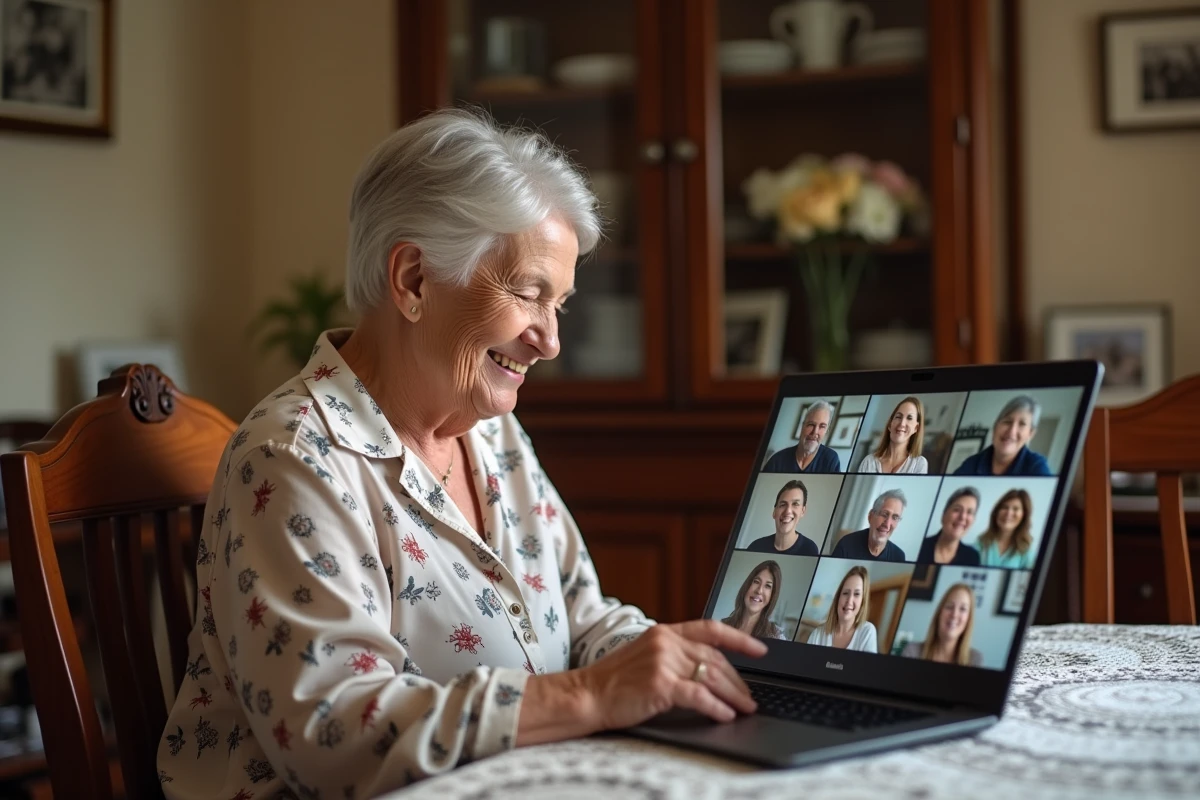
Social networks, thematic forums, and online discussion groups create communities that would not have existed without the Internet. Social connection no longer depends on physical proximity: people sharing a rare interest find each other online, exchange advice, and organize meetings.
This maintenance of connection has a limit: about 2.6 billion people worldwide still do not have access to the Internet. The advantage remains unevenly shared, and efforts to develop connection infrastructures condition the real reach of each of the ten points listed here.