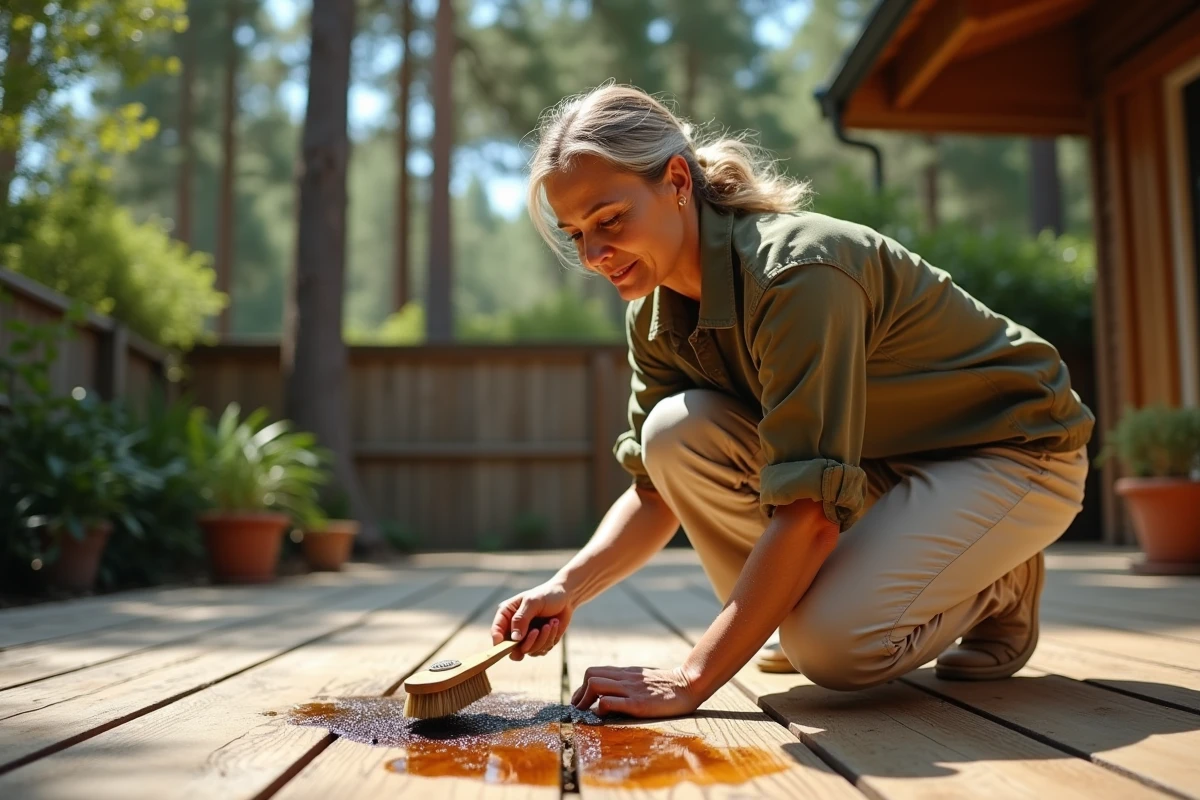
A drop of pine resin on a deck board is insignificant. Ten drops hardened by the sun, however, is a project. The resin oxidizes in the air, adheres to the wood fibers, and resists a simple jet of water. To effectively remove pine resin from a wooden deck, you need to adapt the method to the state of the stain (fresh or dry) and the type of board (solid wood or composite).
Fresh resin or hardened resin: two different problems on wood
Fresh resin remains sticky and pliable. It sticks to shoes, dog paws, and forgotten outdoor toys. At this stage, a gentle scraping with a plastic knife or spatula is enough to remove most of the material without scratching the board.
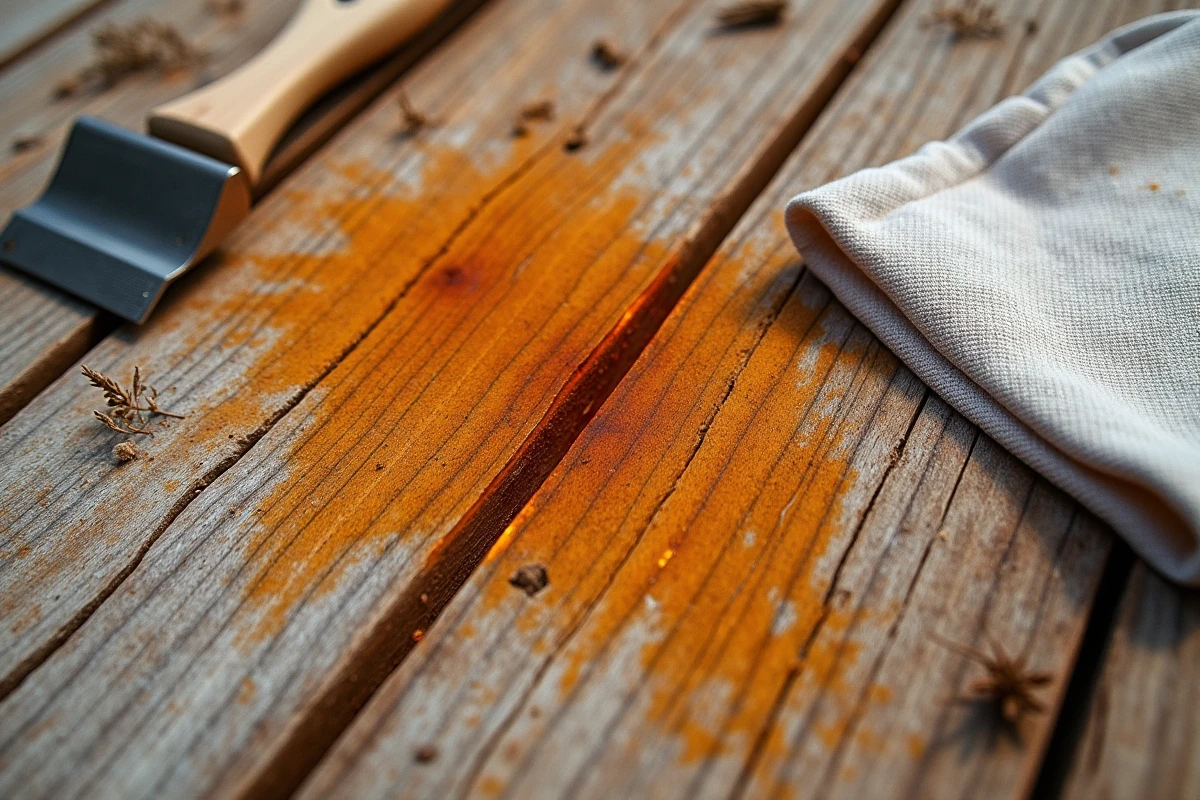
Hardened resin, on the other hand, forms a translucent and brittle crust. It has penetrated the first tenths of a millimeter of the wood. Scraping alone is no longer sufficient: the resin must be dissolved before it can be removed. The longer the resin dries, the more ingrained it becomes. Acting within the first few hours radically changes the outcome.
Have you noticed that stains reappear in the same spots every summer? Coniferous trees like pine continue to exude sap due to the heat, even after being made into boards. This is a normal phenomenon, not a defect in the wood. Knowing how to remove resin from a wooden deck starts with this distinction between a one-time stain and recurring exudation.
Gentle methods to remove pine resin without damaging the boards
Before resorting to a harsh solvent, test the least risky solutions for the wood. The goal is to dissolve the resin without discoloring the board or opening its fibers.
Hot water and black soap
A mixture of hot water and black soap (two tablespoons in one liter of water) softens fresh resin in a few minutes. Scrub with a stiff-bristled brush following the direction of the fibers. Rinse with clear water. Black soap does not discolor wood and is suitable for both oiled and raw boards.
Vegetable oil on dry resin
Apply vegetable oil (sunflower, rapeseed) directly onto the hardened stain. Let it sit for about ten minutes. The fatty substance partially dissolves the resin and softens it enough to scrape with a plastic spatula. Then wipe away the excess oil with a clean cloth. This method works well on small isolated stains.
Baking soda paste
Mix baking soda with a little water to form a thick paste. Apply it to the stain, scrub gently, then rinse. The mild abrasion of the baking soda helps lift the residues without attacking the wood surface.
Here are the gentle methods to prioritize based on the state of the stain:
- Still sticky resin: hot water + black soap, immediate scrubbing in the direction of the fibers, rinsing
- Hardened resin in a thin layer: localized application of vegetable oil, scraping with a plastic spatula after softening
- Ingrained residues after the first cleaning: gently scrubbed baking soda paste, abundant rinsing
Solvents on wooden decks: alcohol, acetone, and their limits
When gentle methods are insufficient, rubbing alcohol or acetone quickly dissolves pine resin. Soak a cloth, apply it to the stain, let it sit for a few seconds, then scrub. The resin liquefies and transfers to the cloth.
Acetone and rubbing alcohol weaken the wood surface. These solvents also remove protective treatments (oil, saturator) and cause premature graying of the treated area. On an oiled deck, you will have a light stain in place of the resin stain.
Deck manufacturers increasingly recommend alkaline degreasers specifically for outdoor wood instead of alcohol or acetone. These products, made from non-aggressive surfactants, dissolve the resin without causing micro-cracks or accelerating the graying of the boards.
Precautions before using a solvent
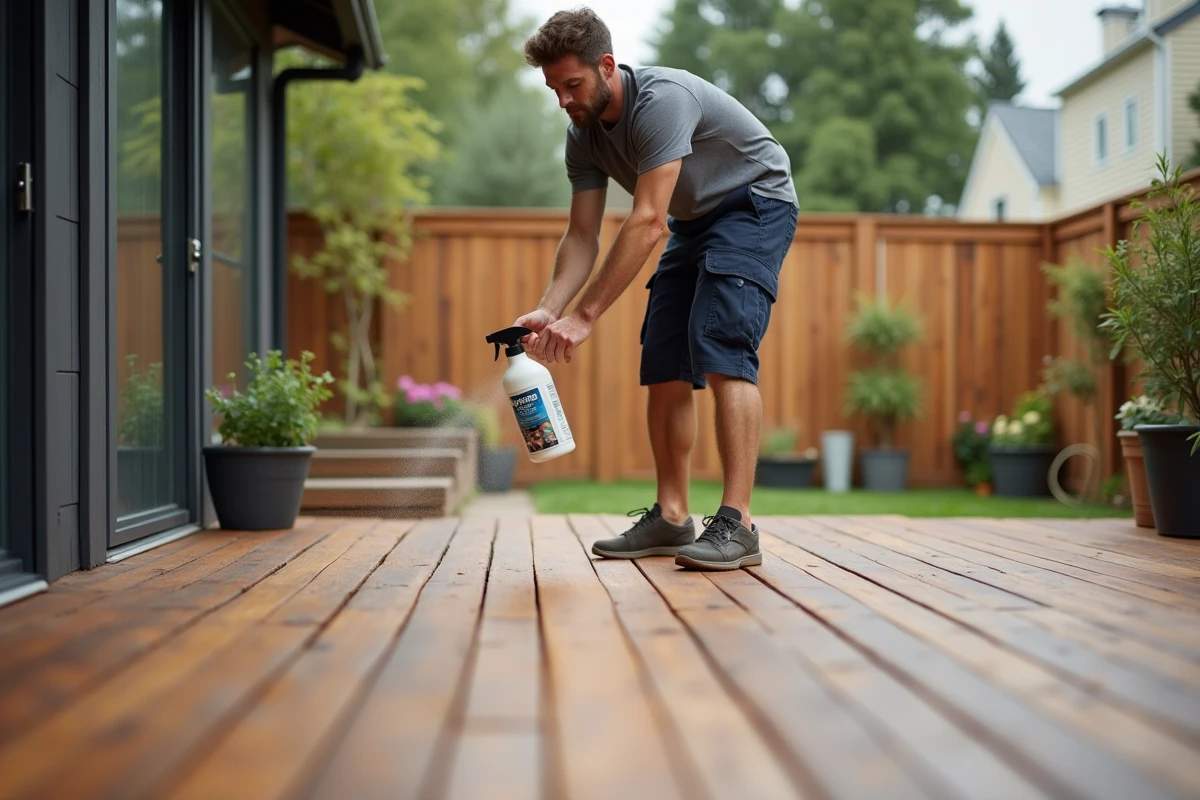
- Always test the product on a hidden area (under a garden furniture, at the edge of the deck) to check for discoloration
- Work in small areas: soak the cloth, not the entire board
- Rinse thoroughly after application to stop the solvent’s action on the wood
- Wear gloves and work outdoors, as acetone evaporates quickly but remains irritating
Composite wood deck: resin is removed differently
On a composite wood deck, pine resin comes from surrounding trees and not from the boards themselves. The good news: composite does not absorb sap like solid wood. The downside: strong solvents attack the protective layer of the composite and leave permanent marks.
On composite, warm water and mild detergent are sufficient. Black soap, dish soap, or a mixture of baking soda and black soap do the job. Scrape with plastic, never metal. Turpentine and acetone should be avoided on this material.
Protecting the deck after cleaning to limit recurrences
Removing the resin is not enough if the deck remains unprotected. The cleaned area, especially after solvent use, ends up with bare wood. It will gray faster than the rest and absorb more future drips.
Deck renovation professionals apply a three-step sequence: stain cleaning, complete drying, then application of a saturator. The saturator penetrates the fibers and creates a barrier that slows the adhesion of resin during future exudations. It also reduces the halos left by solvents.
Wait until the wood is perfectly dry before applying the saturator. On a sun-exposed deck, a few days of good weather are sufficient. On a shaded deck under pines, allow more drying time.
Decks under conifers will always receive new drops of sap. A quick inspection every two weeks during the warm season allows you to scrape off the still fresh resin in a few seconds, before it hardens and requires more intensive cleaning.