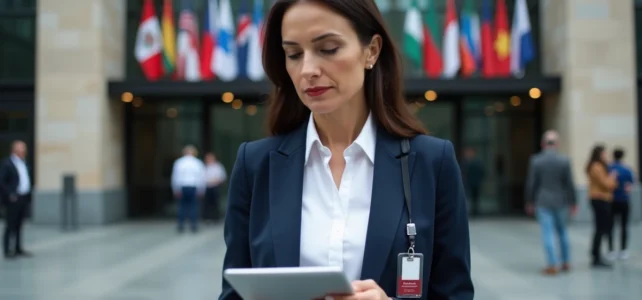
When an airstrike is reported in Lebanon and a strategic strait closes in the process, there are only a few minutes to understand the sequence before the news feed is drowned in reactions. Following international news in real-time is not about accumulating alerts; it’s about knowing how to sort, contextualize, and prioritize world events as they occur.
Source verification in conflict zones: the field reflex
On the ground, a strike video shared on social media can be authentic, recycled from a previous conflict, or manipulated. Newsrooms covering the war in Ukraine or tensions in the Middle East have developed protocols for image geolocation and deepfake detection before any publication.
In practice, metadata from an image is cross-referenced with satellite views, the consistency of the shadow cast is checked against the reported time, and the visible structures are compared with earlier photos. This work takes anywhere from a few minutes to several hours depending on the complexity of the situation.
Several organizations, including UNESCO and the Council of Europe, have published targeted recommendations for real-time coverage of international crises. Their main message: no push notification without prior verification. For those following world news from France or Europe, cross-referencing at least two news agencies before relaying information remains fundamental. Platforms like citizens-news.com provide access to a structured international feed, facilitating this verification work on a daily basis.

Strait of Hormuz and Iran-Israel crisis: reading an escalation live
The announcement by Iran of the closure of the Strait of Hormuz in response to Israeli strikes in Lebanon illustrates a mechanism found in every escalation in the Middle East: a local military action triggers a response on a global economic lever.
The Strait of Hormuz is a chokepoint through which a massive portion of global oil trade passes. Its closure, even temporarily or partially, has immediate repercussions on energy prices in Europe and the United States.
What to monitor in the first hours
- The official statements from the Iranian and American navies regarding the rules of engagement in the strait, which indicate the actual degree of blockage
- The movements of tankers via AIS data (Automatic Identification System), accessible in near real-time on maritime tracking platforms
- The reaction of Asian oil markets, which open before those in Europe and serve as the first indicator of perceived economic impact
- Statements from Hezbollah and Lebanon’s position in the negotiations announced in Washington, which determine whether the ceasefire holds or unravels
This type of layered reading, from military to economic and then diplomatic, allows one to distinguish a posture of deterrence from a real escalation. Analysts vary in their assessments on this point, but the sequence of signals remains the best decoding tool.
Information fatigue and formats that help understand the world
Continuously following international news generates a documented problem: cognitive saturation. We receive dozens of notifications daily about the war in Ukraine, decisions by Donald Trump, tensions between Moscow and Europe, without always being able to connect these events to one another.
In recent years, several international newsrooms have systematized short “explainer” formats and interactive maps integrated directly into their live feeds. The goal is to break the linear flow to provide contextual anchor points.
What works to maintain a clear reading
Chronological feeds alone are not enough. An event like the ceasefire between Israel and Hezbollah followed by new strikes in the Nabatiyé region requires territorial context. A map showing strike zones, ceasefire lines, and negotiation axes provides more than a descriptive paragraph.
Multilingual summaries generated with the help of AI, such as those experimented with by agencies like Associated Press or Reuters, allow coverage of sources in Arabic, Farsi, or Russian without waiting for human translation. Human oversight remains mandatory: these tools are used to detect weak signals in agency feeds, not to write analysis.
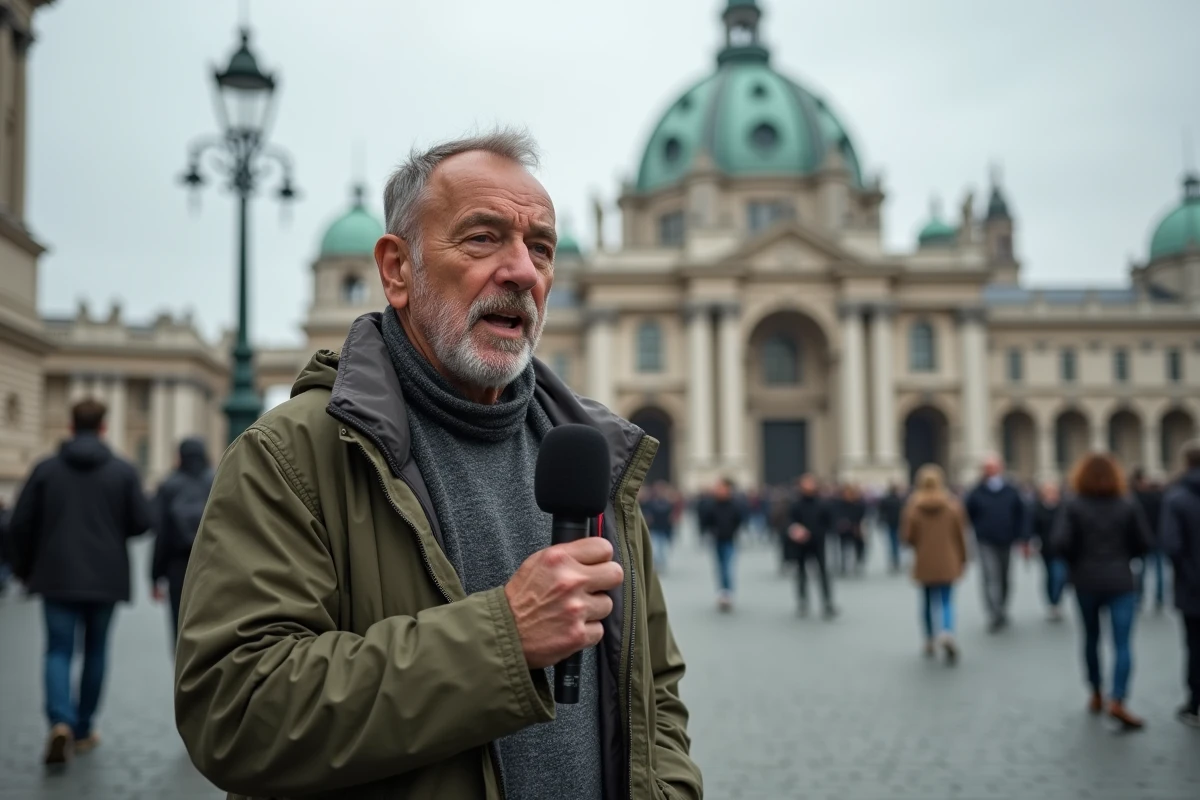
International news and misinformation: the concrete traps of real-time
In a crisis situation, misinformation does not always come from anonymous accounts. Official sources sometimes publish contradictory reports on the same day. This was recently seen with casualty figures in Lebanon, where the Lebanese Civil Defense and Israeli sources provided divergent accounts within a few hours of each other.
UNESCO’s recommendations for live coverage emphasize one specific point: clearly identify unverified content rather than deleting it. Deleting creates a void that rumor fills. Labeling allows the reader to calibrate their trust.
- Before sharing a human toll, check if the source is the Red Cross, a UN agency, or a conflict actor (each has its biases)
- Freely accessible satellite images allow for confirmation or denial of reported destructions, with a delay of a few hours
- Accounts of journalists present on the ground remain more reliable than automatic aggregators, provided they are cross-referenced among several reporters
Following world news in real-time is not a race for speed. It is an exercise in prioritization where each additional minute of verification prevents the spread of an error that thousands of people will take as fact.