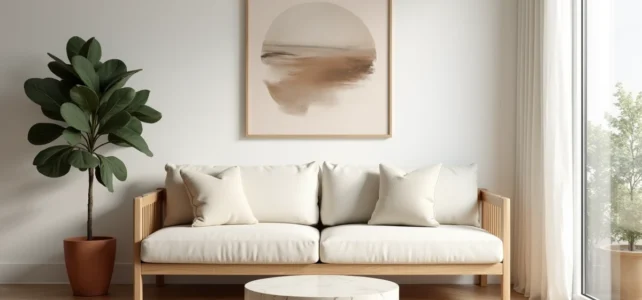
Among the materials gaining ground, the color palettes redefining interiors, and the new uses related to remote work, the parameters to consider for arranging and decorating your home have multiplied in recent years. Distinguishing a sustainable decor trend from a mere fad requires a close look at the available data.
Reversible decoration or classic renovation: what the data shows
The CETIH Observatory on housing 2025-2026 points to a clear shift in renovation requests towards a logic of reversible decoration. Washable paints, repositionable adhesive coverings, and removable lightweight partitions: these solutions allow for adapting interior layouts without engaging in major renovations.
This trend is driven by the rise in furnished rentals and residential mobility. In contrast, classic renovation (plastering, sealed tiling, masonry partitions) remains relevant for homeowners who are settled long-term.
| Criterion | Reversible decoration | Classic renovation |
|---|---|---|
| Implementation time | From a few hours to a few days | Several weeks |
| Adaptability to change | Very high (removable, repositionable) | Low (heavy intervention required to modify) |
| Short-term cost | Moderate | High |
| Material durability | Variable depending on the range | High (stone, tiling, solid wood) |
| Air quality (VOCs) | Certified A+ on recent ranges | Depends on material choice |
This table highlights a central trade-off for anyone looking to decorate their home: reversibility offers flexibility, but traditional renovation remains more robust over time. The choice directly depends on life projects and the occupancy status of the housing.
To delve deeper into these layout questions, the home articles on Communiqués du Net regularly address these issues from various angles.
Low VOC decorative vinyl coverings: a health criterion that has become decisive
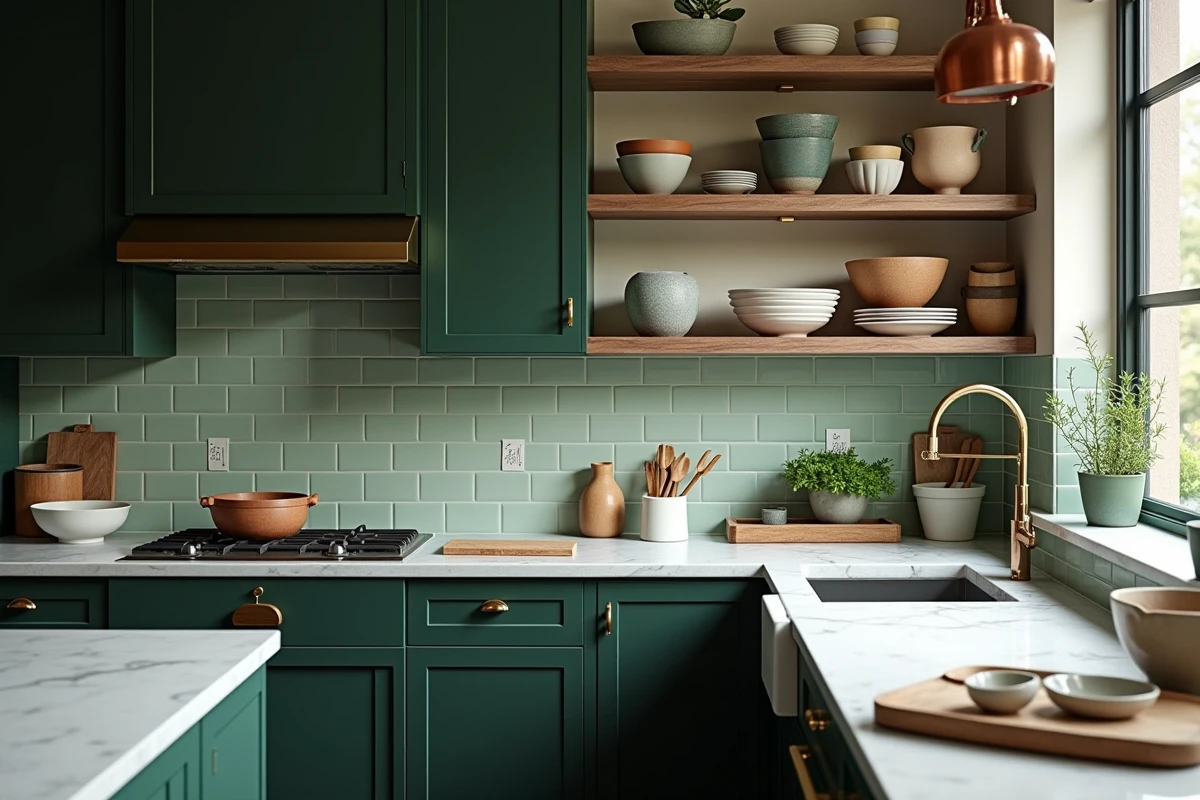
Manufacturers of materials like Tarkett or 3M Cover Styl’ are seeing a rise in certified low VOC vinyl coverings (volatile organic compounds). These products allow for updating furniture and walls while respecting indoor air quality standards, with A+ certification in Europe.
This criterion has become an explicit selling point. Consumers sensitive to indoor health no longer settle for aesthetic appeal: they check labeling before purchase.
What elements to check before choosing a decorative covering
- The VOC emission class (aim for A+ rating, the most stringent in Europe)
- Compatibility with the intended support (painted wall, melamine, glass, metal) to avoid premature peeling
- Moisture resistance if the covering is intended for a bathroom or kitchen, two rooms where condensation accelerates aging
However, a low VOC decorative vinyl does not replace a base treatment on a damp or degraded wall. Applying an adhesive on a poorly prepared surface reduces its lifespan by half.
Invisible home automation and interior design: the end of the high-tech look
The integration of home automation into home decoration is taking a discreet turn. Designer switches, speakers hidden in furniture, and connected blinds integrated into woodwork illustrate this evolution.
Homeowners are seeking connected solutions that visually fade into a warm interior, breaking away from the highly visible high-tech style of the 2010s. The white box placed on a shelf gives way to a control panel embedded in the wall, matching the room’s color.
Connected living room: the features to integrate from the design stage
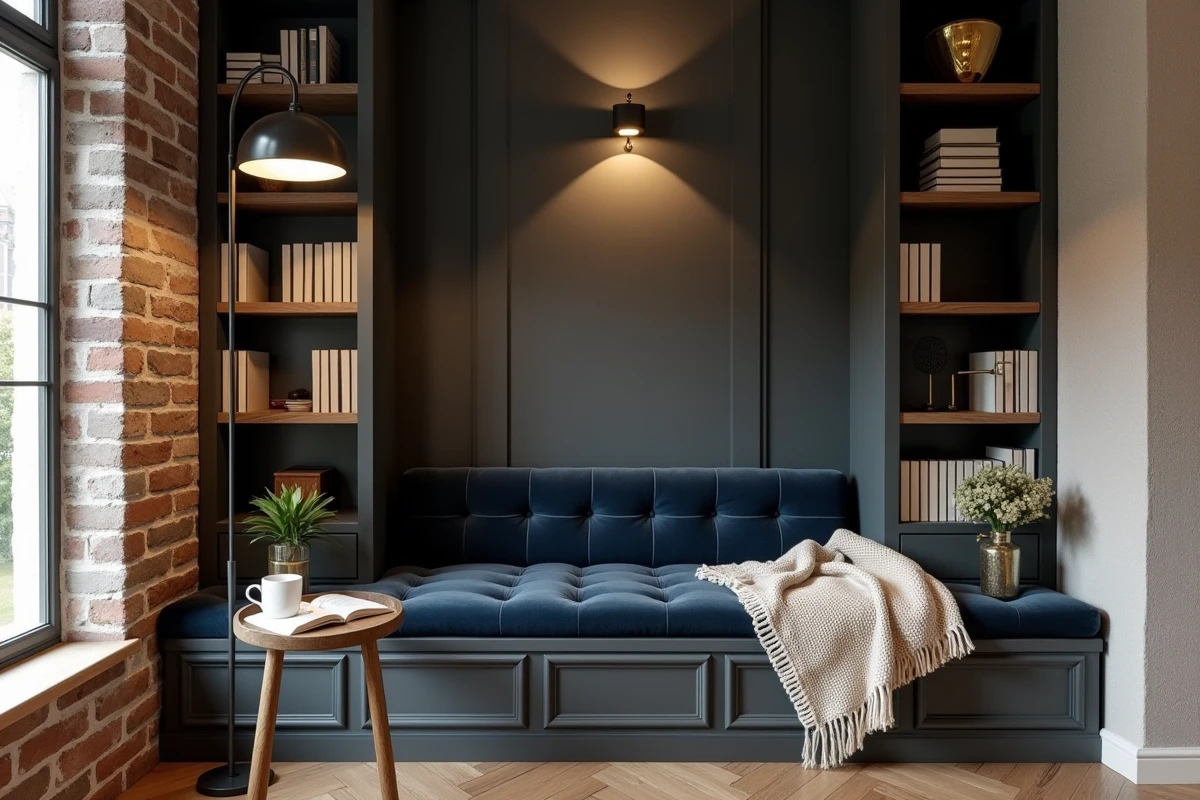
The living room concentrates the majority of connected devices in a home. Planning their location during the layout phase avoids visible cables and unsightly additions later on.
- Recessed outlets behind the TV unit to power devices without visible wiring
- Indirect lighting controlled by a connected dimmer, integrated into cornices or false ceilings
- Multiroom speakers embedded in the ceiling or hidden in custom furniture
- Wall-mounted thermostats with a minimalist design, matching the room’s switches
This approach requires thinking about the electrical plan in advance. Adding a home automation circuit after the wall covering has been installed is significantly more expensive and often leaves visible marks.
Warm colors and raw materials: the palette dominating decor trends
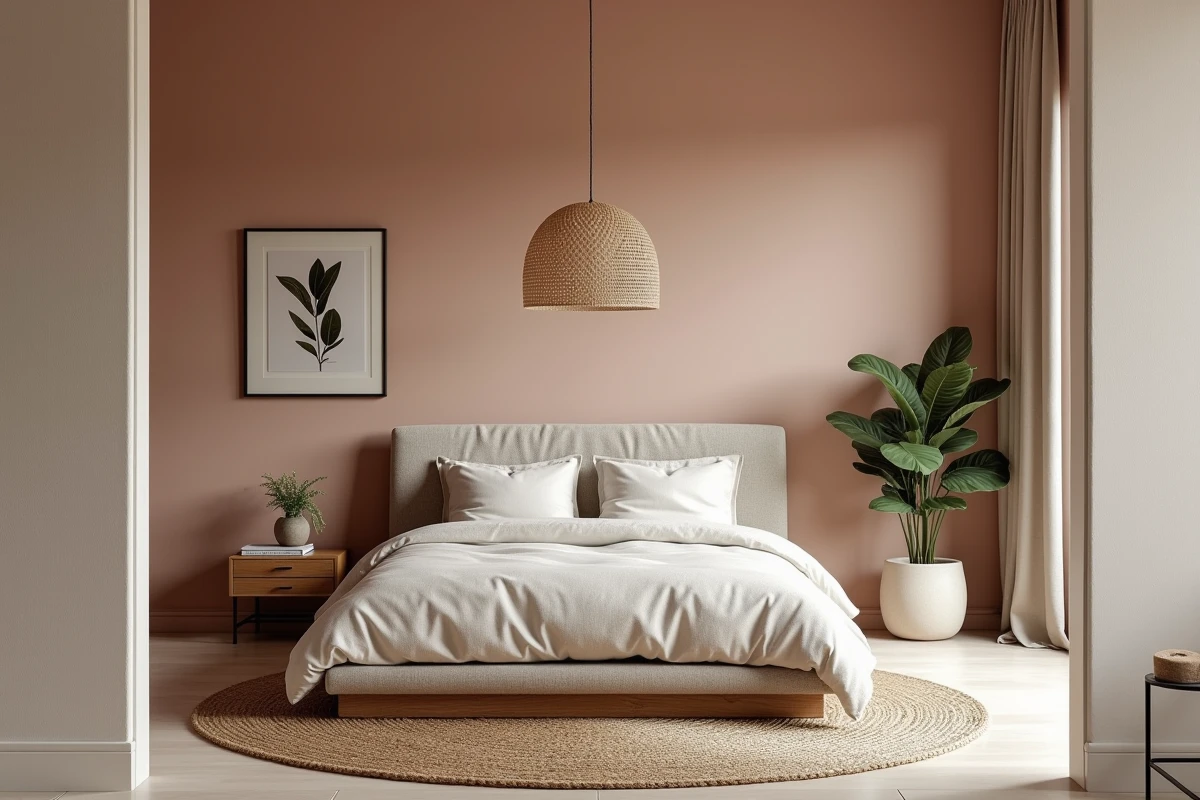
Earthy red, plaster pink, deep browns: warm colors are taking over interiors, replacing the cool tones that dominated in recent years. This palette naturally pairs with raw materials like wood, stone, and terracotta, which are also on the rise.
The combination works particularly well in open living spaces. A wall of exposed stone softened by a plaster pink paint on the adjacent partition creates a textured contrast without overwhelming the room.
This hybridization of bold colors and natural materials also responds to the reduction of surfaces in recent housing. A well-arranged small space appears larger than a poorly designed large room. Choosing a strong color on a single wall, combined with light wood furniture, is enough to visually structure a modest-sized living room.
The common thread of these trends for arranging and decorating your home remains the same: every choice of material, color, or technology should be evaluated based on its reversibility, its impact on air quality, and its ability to adapt to the actual uses of the housing. Planning modular solutions from the start facilitates every future evolution of the layout.