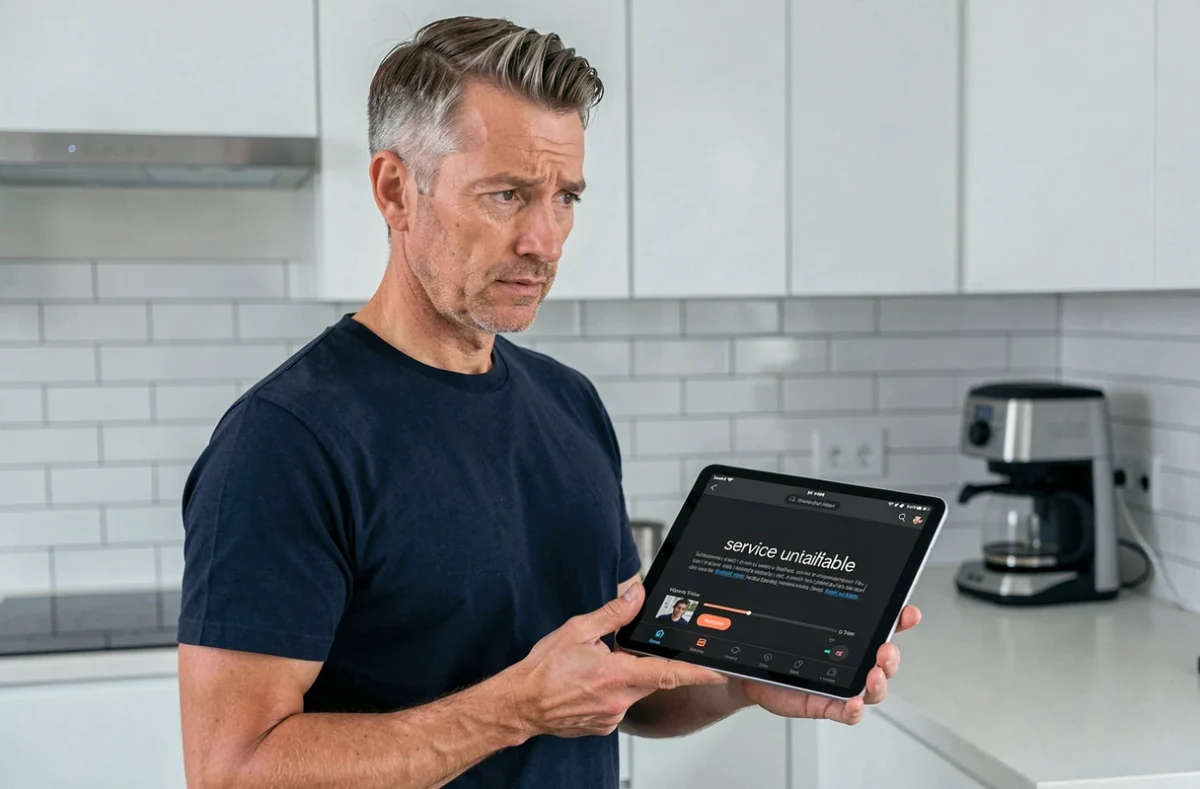
Zaltav is one of those free streaming platforms that regularly change their address or disappear without warning. When the site stops responding, users are left staring at a blank screen, unsure whether the problem is with their own connection, a court order or a permanent shutdown. The lack of official communication from services like this makes it even harder to determine what has happened.
DNS block or local outage: how to identify the source of the problem
Before concluding that Zaltav has shut down, rule out the simplest causes. A DNS block, imposed by an internet service provider following a court order, prevents the domain name from resolving without removing the content hosted on the servers. In practical terms, your browser can no longer find the address, but the files may still exist elsewhere.
A few quick checks can help you tell the difference between a problem on your end and a domain block:
- Try accessing the site from another network (a mobile hotspot or a friend’s Wi-Fi) to see whether the block is linked to your ISP
- Clear your device’s DNS cache and your browser cache, then reload the page
- Check a website uptime monitoring tool to see whether other users are reporting the same error at the same time
If the site remains inaccessible across several different networks and other users confirm the problem, the outage is not caused by your device. It is due to a block, a server-side outage or a deliberate change of address.
One point is worth highlighting: when looking into the Zaltav outage, it becomes clear that this pattern of sudden unavailability has become common among unofficial streaming platforms in France.
Court orders and the blocking of streaming sites in France
In France, the Paris Judicial Court can order major internet service providers (Orange, SFR, Bouygues Telecom, Free) to block illegal streaming sites. These orders target specific domain names, but can be extended to mirror sites reported after the initial ruling.
This explains why a streaming site can work one day and disappear the next. Frequent URL changes, as seen with platforms such as Naxpom and former sites in the Trozam network, are a direct response to these successive blocks.
A block does not mean a shutdown
An access error alone is not enough to conclude that the files or service have been removed. The content may still be hosted on servers abroad. The blocking measure acts as a filter between the French user and the remote server without affecting the content itself.
Blocking indicators and usage indicators also measure different things. A growing number of blocks does not mean that use of these platforms is declining at the same rate. Users move to new addresses, use VPNs or switch to other services.
VPNs and bypassing blocks: what they actually change
When faced with a DNS block, the most common response is to use a VPN to access the site from a foreign IP address. This technical workaround works in some cases, but it has limitations that bypass guides rarely mention.
A VPN does not guarantee that the site will become accessible again. If the service has genuinely stopped operating (servers shut down, domain abandoned), no VPN can fix the problem. In addition, using a VPN does not grant the service you access any distribution rights. Accessing pirated content remains illegal, whether the connection is direct or masked.
Real risks beyond losing access
The real danger goes beyond simple accessibility. Unofficial streaming platforms expose visitors to several tangible risks:
- Fraudulent payment requests that imitate legitimate subscriptions to steal bank details
- Malware installed silently through scripts embedded in video players or redirect windows
- Personal data theft when creating accounts on sites with no meaningful security
- Unknown apps offered for download and presented as necessary players, but containing unwanted software
Be wary of multiple redirects and unusual payment methods that these platforms regularly present.
Find your films and TV shows through legal channels
Rather than endlessly searching for the new address of a site that may change again in a few weeks, it may be more effective to check whether the content you want is available on legal platforms. The range of legal streaming services has expanded considerably in recent years.
Several services offer free, ad-supported catalogs alongside their standard subscriptions. Platforms such as Pluto TV, Rakuten TV (in its free mode) and French TV channel catch-up services provide access to a range of content that covers a significant portion of what pirate sites offer.
The “unavailable catalog” argument
One reason often given to justify illegal streaming is that certain titles are missing from official platforms. This is sometimes true: older films, lesser-known foreign series or productions whose rights are being transferred between distributors may indeed be unavailable.
In these cases, renting titles individually through services such as Apple TV, Google Play Movies or Amazon Prime Video often makes it possible to find what you’re looking for at a modest cost. Renting a film for a few euros costs less than having your bank details stolen.
Zaltav’s unavailability ultimately raises a broader question about relying on services whose continued existence is never guaranteed. Saved favorites, playlists and viewing history disappear along with the site. Switching to a legal platform, even a paid one, at least offers the assurance that the service will still be there next month, with your data intact.