
A set of keys that disappears, and there goes the entire schedule. For those living under the threat of lost objects, the temptation to adopt a connected gadget becomes almost irresistible. Finding your wallet under the couch? Easy, these little digital trackers promise. But behind the promise of serenity, a doubt arises: who is really holding the leash, the owner… or someone in the shadows?
As technology seeps into our lives, entrusting our belongings to an app becomes a reflex. But should we pay for this peace of mind with a part of our privacy?
Lost objects: why are tracking apps so appealing?
The fear of seeing your bag or keys vanish is the modern anxiety. It’s impossible to ignore the phenomenon: the proliferation of tracking apps is rooted in this everyday insecurity. Smartphones and connected objects turn into watchdogs: impossible to lose without leaving traces.
Technology doesn’t perform miracles, but it adapts to all scenarios:
- The connected keychain that signals the position of a lost object via a mobile app.
- The Bluetooth tracker, capable of locating an object within immediate range thanks to the phone’s connection.
- The GPS tracker, which tracks in real-time, ideal for never losing the trail, even from a distance.
- The connected tag (NFC or QR code), which simplifies the identification and return of an object, all without batteries or complicated settings.
One example? The RabbitFinder app: clear interface, interactive map, movement history, alerts as soon as an object moves away. It’s no longer a luxury, it’s a habit. Users praise the practicality, battery life, and the complementarity of technologies (Bluetooth, GPS, NFC). The result: less stress, more time, and the panic of loss recedes.
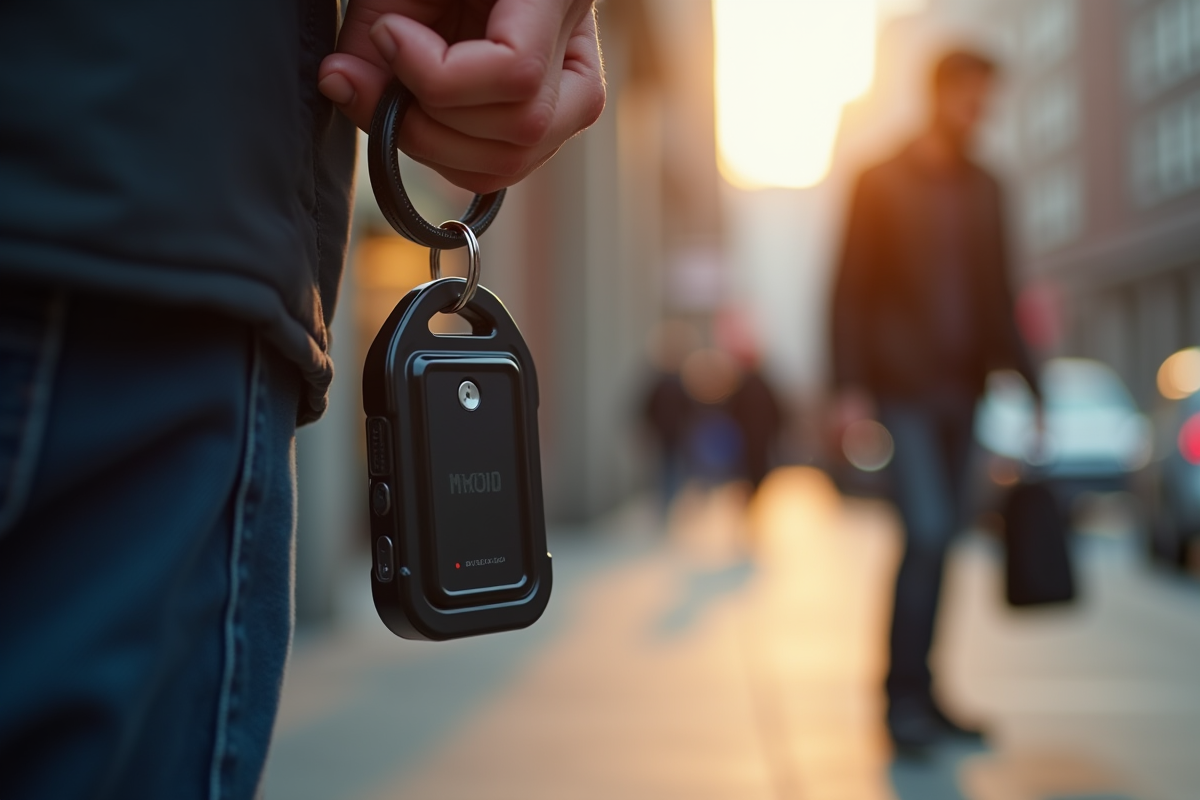
Reliability, security, limits: can we really entrust our belongings to them?
The reliability of these solutions depends not only on the gadget but also on the infrastructure surrounding it. A GPS tracker does not work alone: it uses LoRa, Sigfox, or 4G LTE-M networks, depending on the needs. Vehicle tracking, luggage management, monitoring vulnerable individuals or corporate fleets… The mobile app orchestrates everything: live map, alerts at the slightest exit from the zone, detailed history. But everything relies on signal quality, battery life, and network coverage.
- A classic GPS tracker locates within ten meters, sufficient for most uses.
- Connected tags facilitate the return of nomadic objects without worrying about recharging.
But the question of data security arises. From creating an account to storing location histories, each step exposes users: privacy protection, encryption, authentication, permissions to manage… Manufacturers compete with devices, but vulnerability remains.
No technology is infallible. Off-network, any system falters. The battery, no matter how efficient, eventually gives out. Even in logistics management or recovering valuable objects, GPS trackers do not eliminate the risk of failure, nor the threat of misuse of collected data.
Entrusting a part of our lives to invisible chips: relief or a new source of anxiety? The question hangs in the balance, somewhere between an empty pocket and a blinking screen.