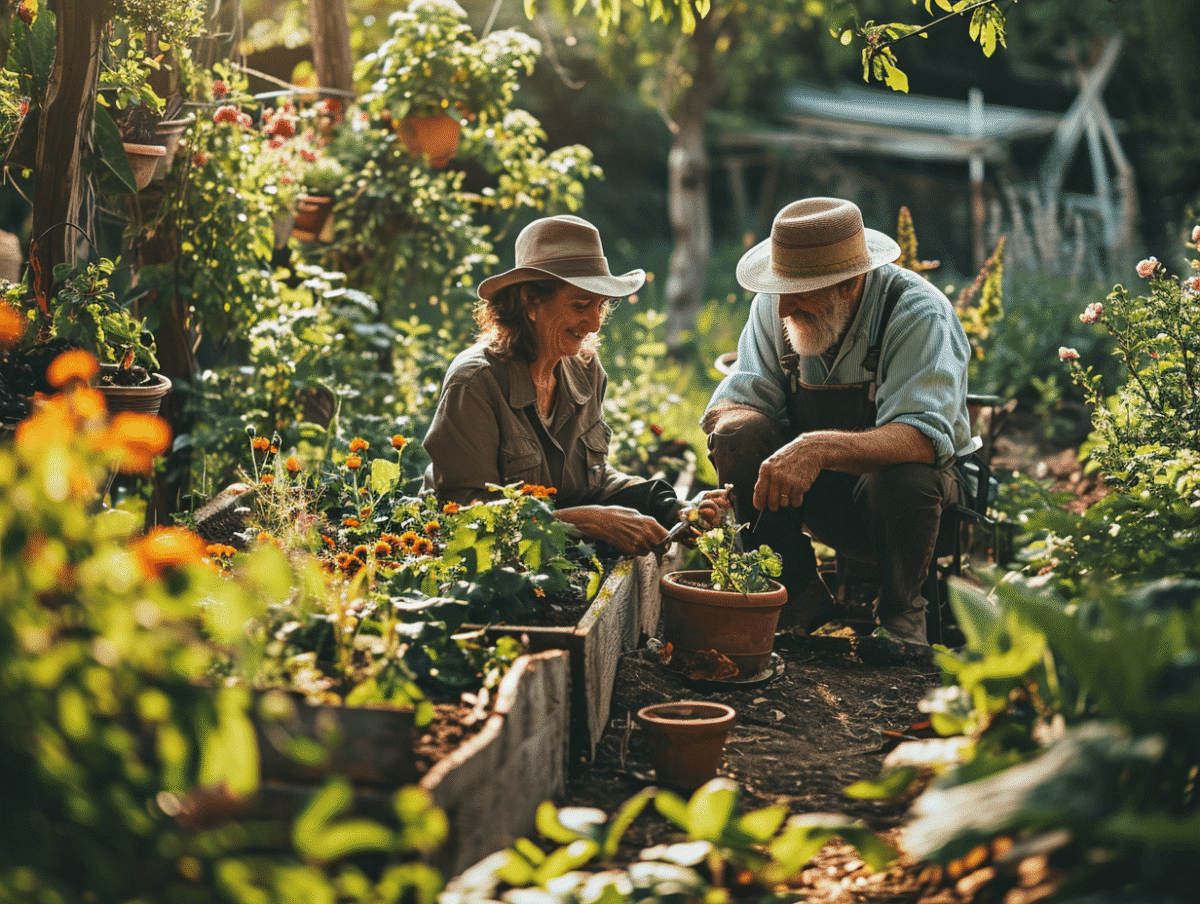
As age advances, gardening proves to be a beneficial activity for seniors, both for the mind and the body. However, adapting this practice requires some adjustments to ensure comfort and safety. Ergonomic tools, raised beds, and less physically demanding cultivation techniques allow for the enjoyment of gardening without neglecting the therapeutic aspect. Indeed, working the soil, sowing, planting, and harvesting stimulate mobility, promote relaxation, and strengthen the connection with nature, thus contributing to a better quality of life for the elderly.
The therapeutic virtues of gardening for seniors
Gardening, a favored activity among many seniors, stands out not only as a preferred hobby but also as a true therapeutic ally. Research abounds and highlights the benefits of gardening for physical and mental health. Indeed, gardening stimulates motor skills, coordination, and balance, while significantly reducing the risk of developing chronic diseases.
The therapeutic aspect does not stop there; therapeutic gardening, or horticultural therapy, uses the garden as a space for care and rehabilitation. This practice proves effective in reducing symptoms of stress, anxiety, and depression. Through projects like ‘Seniors Univers’, which promote specially designed therapeutic gardens, elderly individuals rediscover the joy of cultivating in accordance with their abilities, while benefiting from a secure and adapted environment.
Gardening proves to be a powerful social vector. It fosters social relationships and serves as a bulwark against social isolation, a common scourge among the elderly. The collective dimension of gardening, through workshops or shared gardens, encourages the exchange of knowledge, sharing of experiences, and strengthens the sense of belonging to a community.
Gardening stands as a holistic practice, capable of improving mental health and providing seniors with an environment conducive to personal growth. Therapeutic green spaces, which are expanding, testify to the enthusiasm for this activity, which, far from being a mere distraction, now establishes itself as a tool for preventive and curative health.

Practical tips for adapted and safe gardening for seniors
To ensure that gardening remains a source of joy and not hassle for seniors, some adjustments are necessary. Priority should be given to safety and accessibility: choose lightweight, ergonomic, and easily manageable tools. Consider raised vegetable gardens to avoid repeated bending and protect the back. Raised beds or adjustable planting tables are ideal solutions for maintaining proper posture and reducing effort.
The autonomy of seniors in the garden should also be a central concern. Ensure that pathways are wide enough for easy passage, and if necessary, for a walker. Cultivation areas should be easily accessible, with strategically placed rest areas for well-deserved breaks. Aids such as gardening seats or kneelers can also contribute to a more comfortable and less tiring work experience.
Collective gardening and gardening workshops offer a rewarding community dimension. They allow for sharing convivial moments, exchanging tips, and breaking isolation. These initiatives promote mutual assistance and learning, key elements for a gardening experience that is both enjoyable and safe. Encourage these gatherings, which are vectors of a lively social dynamic, within adapted gardens where every senior can find their place and cultivate in complete serenity.